Uji i Ftohtë Tepelenë: The Springs, History, and How to Visit
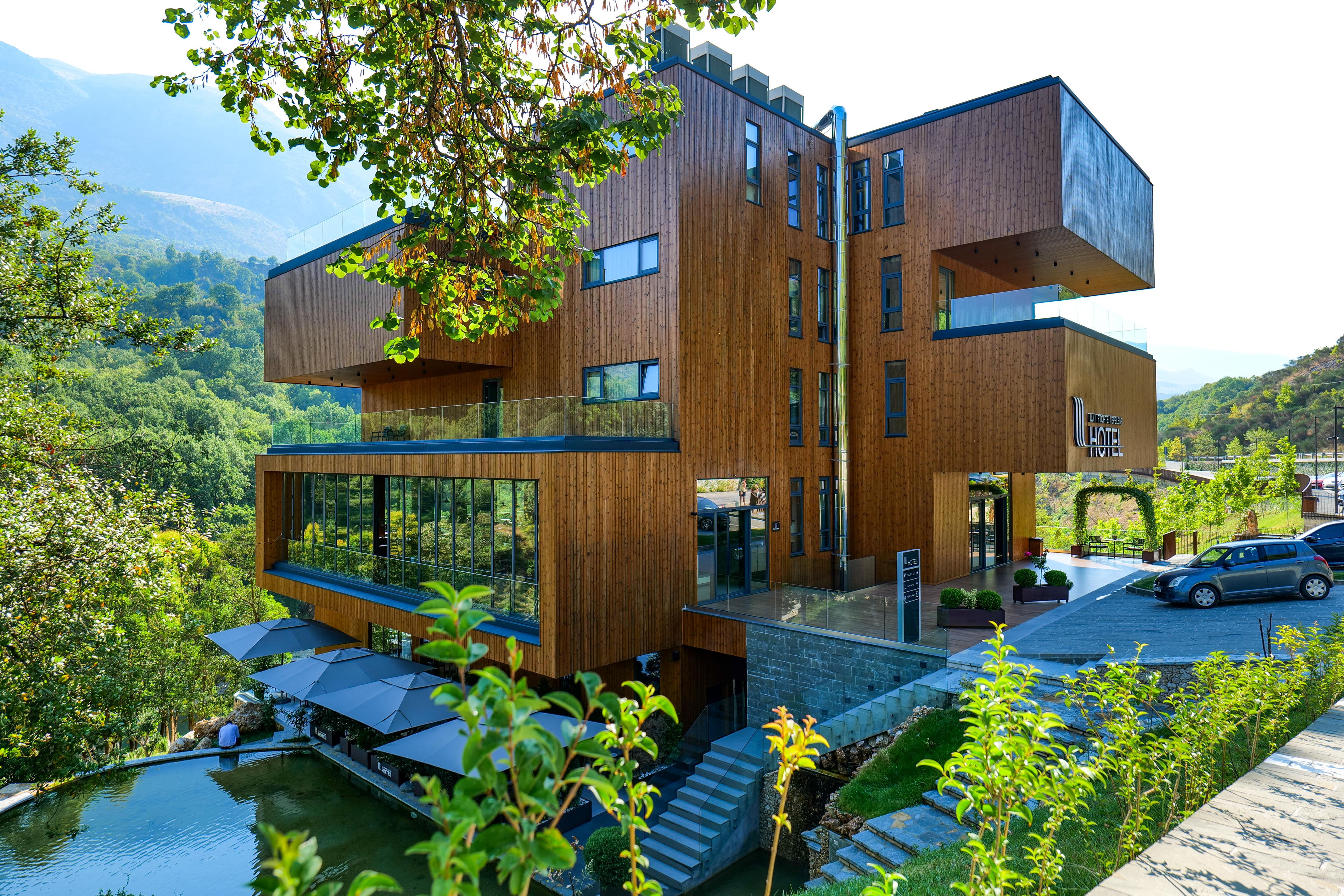
Uji i Ftohtë is a group of natural springs about 8 km south of Tepelena, alongside the road Tepelena–Gjirokastër. The water emerges from the limestone rocks of the valley of the Drino River and remains cold throughout the year. Since 2020, the springs have been designated a natural monument. It is the best-known stop for lunch and a break on the way to Gjirokastër and Sarandë.
Anyone who has travelled south knows this stop: the air suddenly cools and you can hear water flowing among the oak trees as cars pull over one after another. We work and live right here by the springs, so we have gathered answers to the questions visitors ask most often: where it is exactly, why the water is so cold, what its history is, and how to make the most of your visit.
Where is the Uji i Ftohtë Tepelenë?
The springs are located on the left slope of the Drino Valley, about 8 km south of the town of Tepelena, near the village of Lekël, right beside the SH4 national road connecting Tepelena with Gjirokastër and the border at Kakavija. There is no need to walk far: the springs and small waterfalls are just a few steps from the parking area.
| Destination | Distance | Time |
|---|---|---|
| Tepelena town centre | 8 km | 10 min |
| Gjirokastër | 25 km | 25–30 min |
| Përmet | 50 km | 1 hour |
| Vlorë | 85 km | 1 hr 30 min |
| Sarandë | 80 km | 1 hr 30 min |
| Tirana | 210 km | 3 hours |
Why is the water always cold?
The spring water does not come from the surface. Rain and snow that fall on the Kurvelesh mountains seep into the limestone rocks, flow through cracks and underground caves, and emerge at the surface exactly where the limestone meets the valley’s flysch rocks. During this long underground journey, the water maintains a low, stable temperature, so it feels icy in August but does not freeze in winter.
There are several springs, not just one. They join into streams and small waterfalls among the trees and flow into the Drino River, which farther north flows into the Vjosa River. Therefore, Uji i Ftohtë is part of the Vjosa River, which has been a National Park since March 2023.
A natural monument since 2020
In 2020, the Uji i Ftohtë springs were declared a natural monument, covering an area of approximately 1.5 hectares, under the care of the National Agency of Protected Areas. Their value is hydrological (springs that remain consistent throughout the year), geomorphological (the contact between limestone and flysch) and recreational. Oak trees, hawthorns and native shrubs grow around the springs.
How to protect it: do not leave litter behind, do not wash cars or dishes directly in the springs, and fill water only with clean bottles. It is a protected place that belongs to everyone.
History and Ali Pasha
The springs have been known and used for more than 250 years. Local tradition links their discovery to Ali Pasha of Tepelena (1740–1822), the ruler born in this area, who made Tepelena one of his main centres. For centuries, travellers, shepherds, and caravans crossing the Drino Valley stopped here to cool off, just as cars do today when travelling south.
Things to do at Uji i Ftohtë
- Drink and collect water directly from the spring. Many travellers fill bottles for the journey.
- Have lunch surrounded by water and trees. This is the main reason most people stop. At our restaurant, we prepare traditional southern Albanian cuisine using local produce.
- Have a coffee at the bar, with the sound of the waterfalls in the background.
- Take photos of the small waterfalls, especially in spring when the water flow is strongest.
- Cool off on hot days. In July and August, when temperatures in the valley often exceed 35°C, this is the coolest place in the area.
- Use it as a base for visiting Tepelena Castle, Lekël Castle, rafting on the Vjosa, the Nivica Canyons, and Gjirokastër. See our guide: Things to do in Tepelena .
When should you visit?
| Season | What to expect |
|---|---|
| Spring (March–May) | Highest water flow, most beautiful waterfalls, and lush greenery. |
| Summer (June–August) | The hottest season in the valley, so the coolness of the springs is felt more strongly. Also the busiest season. |
| Autumn (September–November) | Pleasant temperatures, fewer people, ideal for a leisurely lunch. |
| Winter (December–February) | Quiet and green. The springs continue to flow as usual. |

Uji i Ftohtë Tepelenë or Uji i Ftohtë of Vlora?
There are two well-known places in Albania with the same name, and they are often confused:
| Cold Water, Tepelena | Cold Water, Vlora | |
|---|---|---|
| What it is | Mountain springs and small waterfalls, a natural monument | A coastal area with beaches, hotels, and cafés |
| Location | 8 km south of Tepelena, on the road to Gjirokastër | South of central Vlora, along the Bay of Vlora |
| Why it is called that | Cold springs emerging from the mountain | Freshwater springs that flow into the sea |
| What people visit for | Nature, lunch, a break on the road, and a base for exploring the south | Beach, sea, and nightlife |
The distance between them is about a 1-hour-and-30-minute drive. If you are looking for Hotel Uji i Ftohtë, we are in Tepelena.
Also, do not confuse this place with the bottled water called “Tepelena”, which is bottled at a factory in the area. The Uji i Ftohtë springs are a natural monument open to everyone.
Where to stay at Uji i Ftohtë
Hotel Uji i Ftohtë is located right by the springs, with rooms and suites (some with balconies and river views), a restaurant, a waterside bar, and free parking. It is a peaceful base for exploring Tepelena, the Vjosa, and Gjirokastër without staying in town.